
Pushing the Envelope for Transit Cradles: CPS and IPI
Posted at Octubre 27, 2025The integrity of conveyor components during transport is critical to ensuring operational efficiency. Pulley systems require particularly careful handling to avoid damage that can compromise performance.
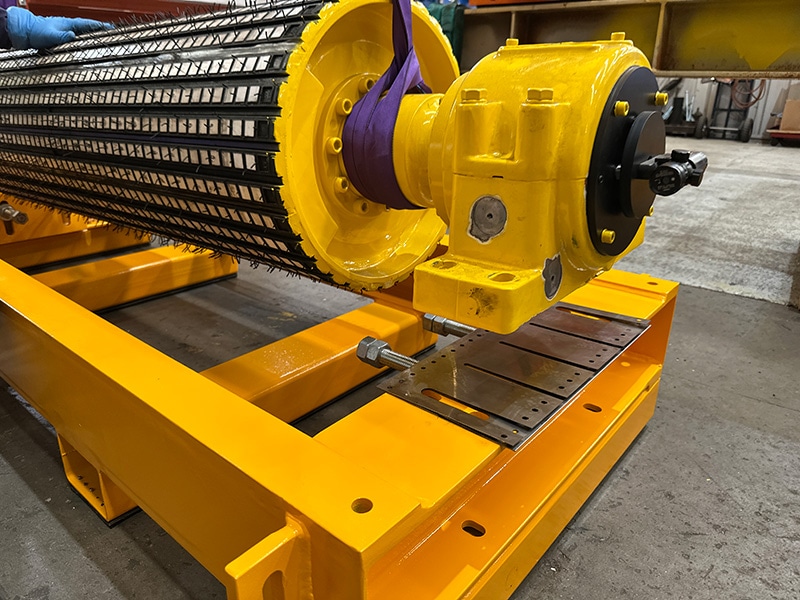
IPI Australia, in collaboration with the CPS team, is advancing research into optimised transit cradles to address this challenge by reducing strain on pulley bearing systems during transport. These advancements aim to improve both the operational lifespan and overall performance of conveyor pulleys.
Supported by CPS’s precision manufacturing capabilities, the new cradle designs are being produced to our high standards of quality and durability, ensuring their innovations are fully reflected in the data from subsequent testing.
Pulley Integrity from Cradle to Commissioning
Pulleys are a critical component in conveyor systems, providing the motive force that drives the belt from end to end. Ensuring that pulleys arrive at site in optimal condition is essential for ensuring they operate at full capacity and enjoy their maximum possible operational lifespan.
However, transportation over uneven or poorly maintained roads can pose significant risks. Excessive G-forces caused by sudden drops, potholes, or continuous vibration can damage pulley bearings, leading to a range of operational issues.
These issues may include lubrication failures, increased belt wear, elevated vibration levels, bearing seizure and reduced equipment lifespan. Such failures can compromise the smooth operation of the entire conveyor system, resulting in costly downtime and maintenance.
Reducing the mechanical stresses placed on pulleys during transit is therefore a key area of research. CPS is pleased to support IPI Australia in this effort, recognising the potential benefits for both equipment longevity and operational reliability.
Data-Driven Design
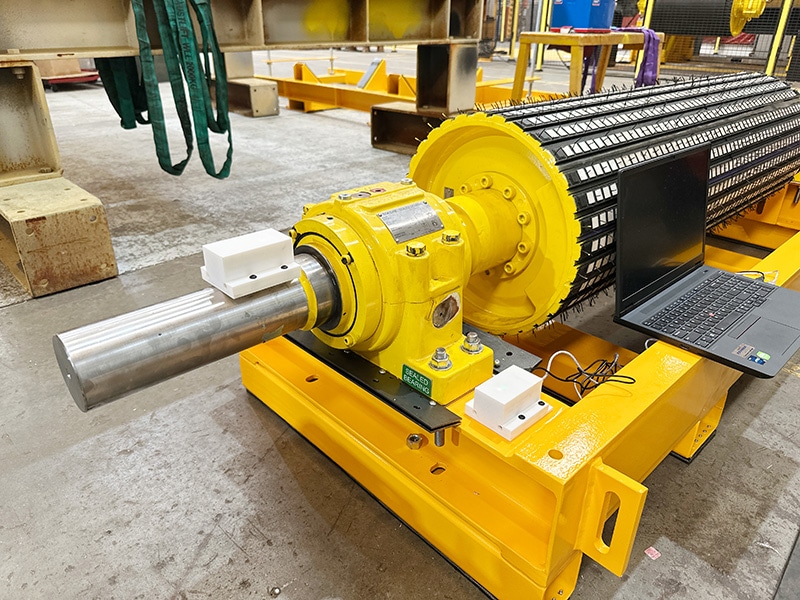
The development of the new cradle designs has been guided by rigorous data collection and analysis. IPI Australia has equipped pulleys with dataloggers during transit to monitor the forces exerted on them in various transport conditions. These dataloggers capture both radial and lateral force data.
This data enables IPI to refine cradle designs to better absorb and distribute these forces. Additionally, the data has proven useful in identifying recurring hazards, such as potholes or uneven surfaces on frequently used transport routes. By mapping these hazards, further mitigation strategies can be explored to enhance transport safety and consistency.
Based on this research, IPI has produced the first iteration of their optimised cradle. While not yet commercially available, early results are promising. Compared to standard transit cradles, the new design has demonstrated an average 50% reduction in vertical high-energy events, typically caused by sudden drops, and a 75% reduction in lateral high-energy loads. These reductions suggest a significant improvement in the cradle’s capacity to protect pulley bearings during transit.
Further testing and refinement will be necessary to quantify the long-term impact on bearing health and overall pulley performance. However, initial observations indicate that the new cradle design could play a substantial role in reducing maintenance requirements and extending equipment life.
Looking Ahead
With promising early results and ongoing refinement, the optimised cradle design represents a significant step forward in pulley transport technology. As the industry moves towards predictive maintenance and data-driven asset management, innovations like IPI’s cradle system support these goals by reducing unplanned downtime and improving lifecycle performance.
As part of the Fenner Conveyors portfolio, CPS remains committed to supporting innovations that enhance system reliability and operational excellence. We will continue to provide updates as research progresses. For more information on this and other developments, subscribe to the Conveying Innovations newsletter.