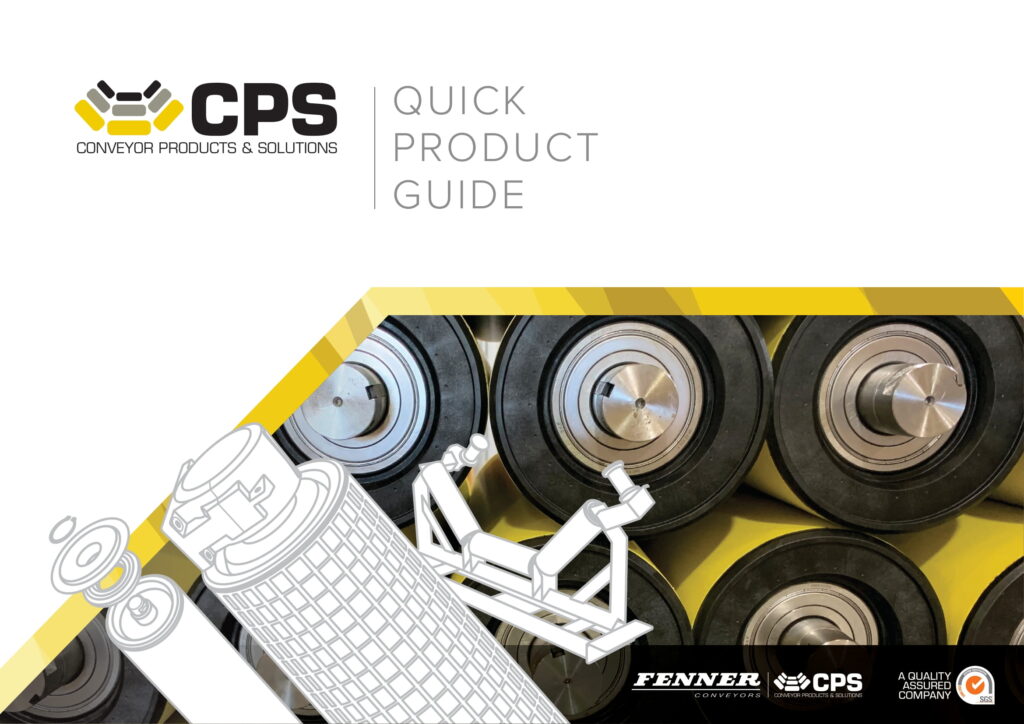

Roller and Pulley Storage Best Practices
Posted at November 17, 2025Often, it’s worthwhile maintaining a stock of rollers and pulleys on-site, to remove lead time from the equation when a replacement is required. However, it’s important to ensure that this stock is stored properly, so that components remain in optimal condition for when they’re required.
See below for a guide on the best practices for storing CPS Rollers and Pulleys.
CPS rollers are supplied in either crates or pallets, while pulleys are delivered in a transport cradle. Stock should remain in the container they were delivered in until installation. Inappropriate storage such as excessive sun exposure, rapid or extreme temperature fluctuations, or continuous vibrations in the storage area can result in damage and shortened service life for the components.
CPS Roller Warranties
The standard CPS warranty is valid for 12 months, or 18 months from the date of delivery. If project rollers are to be stored for longer than 12 months prior to installation, please contact our team. We will gladly assist in developing a site-specific preservation plan.
Maximum Storage Duration
To prevent degradation, rollers should not be stored beyond the following durations:
- Undercover and Controlled Conditions (e.g. warehouse): 24 months
- Open Site Storage (e.g. yard): 18 months
CPS recommends that rollers be either installed or disposed of once they reach their maximum recommended storage term. Pulleys in contrast, should not be stored for more than six months.
After a long period of storage, both rollers and pulleys can have grease settle and degrade in their bearing assemblies. This is why it’s important to re-distribute the grease regularly by rotating pulleys 2-3 times rotations monthly and pulleys the same every three months.
Protection from Water, Dust, and Chemicals
Damage to protective coatings can occur during transport or from exposure to rain, splashes, immersion, condensation, dust, hydrocarbons, and chemicals. This may lead to corrosion of steel components and reduced service life. Rollers and pulleys should be stored in roofed or covered areas to minimise exposure to moisture and contaminants. Avoid locations where water immersion is possible.
Solar Radiation
Polymer rollers stored for more than two weeks should be kept in shaded areas. CPS crates are designed with covers to provide adequate shade. If the cover is removed, relocate the rollers to a shaded storage area.
Stacking of Pallets and Crates
CPS roller crates may be safely stacked two high during storage. However, during transport, crates should be stacked in single layers to prevent spillage or damage. CPS Pulley frames should not be stacked; the frames are rated only for the pulley they are transporting.
Storage Orientation
Rollers and pulleys should be stored flat rather than upright. Upright storage can place undue stress on internal components over time.
Plastic Wrapping
Do not wrap rollers or pulleys in plastic if removed from their initial wrapping. Our own plastic wraps include special desiccants to prevent moisture build up, but without these over time, condensation and moisture can accumulate, leading to water damage and corrosion.
Temperature Control
Rollers and pulleys should be stored in environments with stable temperatures. They are designed to operate within ambient temperatures ranging from -10°C to 55°C. Avoid areas with rapid or extreme temperature fluctuations.
If you have any further questions, don’t hesitate to reach out to our team.